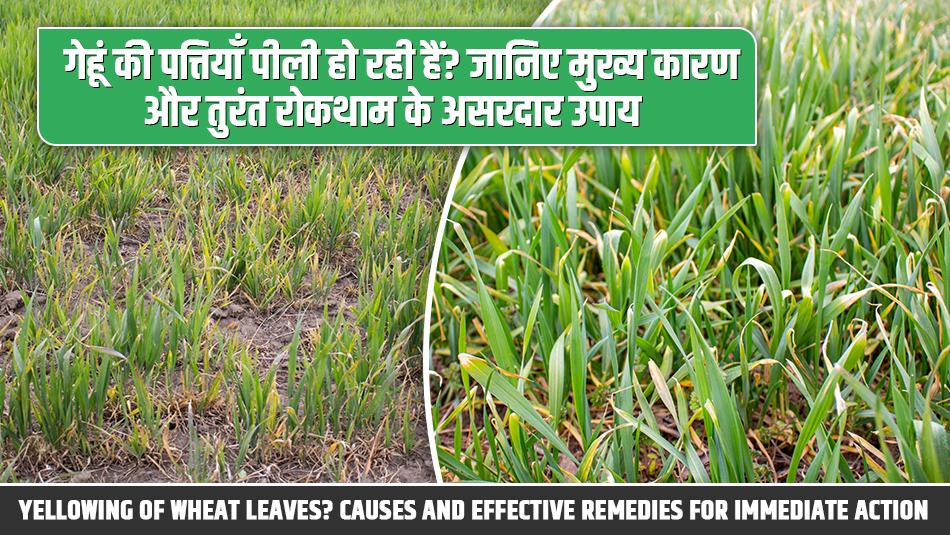

During the Rabi season, major crops like wheat and chickpea are currently at the 20–25 day growth stage. Farmers are applying first irrigation along with urea in wheat fields, while initial irrigation is also being carried out for chickpeas. At this stage, farmers often notice yellowing in wheat and wilting in chickpeas, which can adversely affect yields. Agricultural experts have issued detailed guidance to tackle these issues effectively.
Yellowing in wheat is primarily caused by nitrogen deficiency. Key symptoms include:
Other contributing factors include iron deficiency, zinc deficiency, waterlogging, and fluctuating temperatures.
1. Address Nitrogen Deficiency
2. Correct Iron Deficiency
3. Correct Zinc Deficiency
4. Prevent Waterlogging
The primary cause of wilting in chickpeas is Ukhtha or wilt disease, which spreads rapidly due to infected soil, contaminated seeds, and irregular irrigation.
1. Fungicide Spray
2. Alternative Method
According to Dr. Rajendra Singh Chhokar, ICAR, termites attack young plants and can destroy them entirely, causing uprooting.
Control Measures:
This method is considered highly effective for termite control.
Wheat and chickpea crops are at a sensitive growth stage during the Rabi season. Timely intervention for yellowing, nutrient deficiencies, and pest/disease management can increase yields by 20–30%. By following these expert recommendations, farmers can ensure healthy crops and higher production.
Latest Update