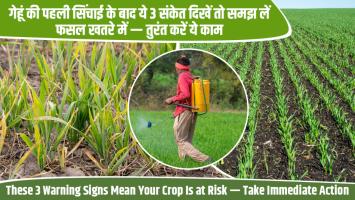
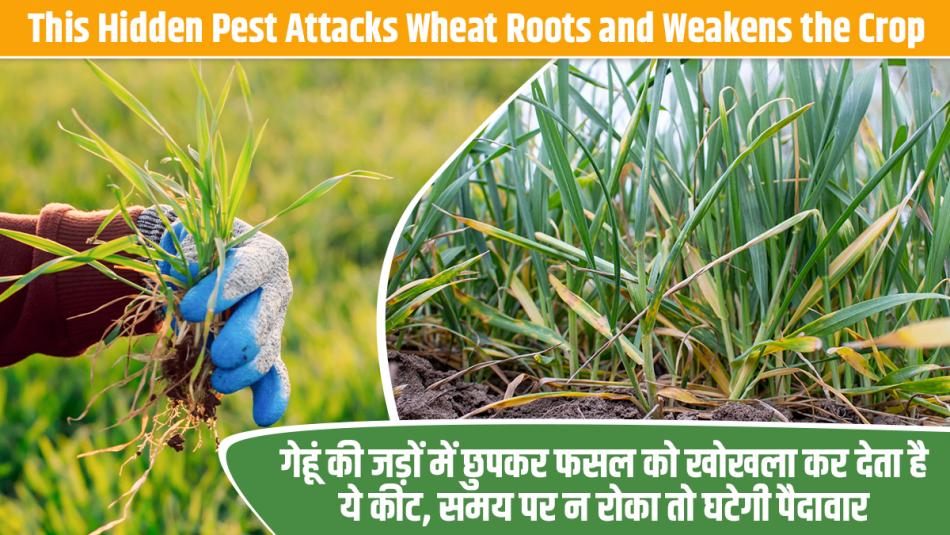

Wheat is one of the most important crops of the rabi season. Farmers take great care of timely sowing, irrigation, and fertilization to achieve good yields. However, pests and diseases attacking the crop at an early stage can undo all this hard work. One such dangerous and often unnoticed pest is the root aphid, which silently damages the roots and reduces wheat productivity.
Root aphid infestation usually appears 20 to 25 days after sowing. It is caused by very small insects known as aphids that attach themselves to the roots of wheat plants and suck plant sap.
In the early stages, the damage is not easily visible above ground. Gradually, however, the plant becomes weak, growth slows down, and affected plants may start drying.
Farmers can identify this problem in the field through the following symptoms:
These insects are root aphids, which cause maximum damage by feeding directly on the root system.
Root aphids suck nutrients from the roots, which halts plant growth. Weak roots cannot anchor the plant properly, making it easy to uproot.
If not controlled in time, the pest can spread rapidly throughout the field, leading to:
According to agricultural experts, root aphid infestation is most common 20 to 30 days after sowing. During this period, termite attacks may also occur in some fields, often confusing farmers.
Both root aphids and termites damage plant roots, which makes identification difficult. However, the good news is that the same control method and chemical treatment are effective against both pests, helping farmers reduce additional costs.
If the above symptoms are noticed, farmers should act immediately. Experts recommend the following treatment:
This method ensures that the pesticide reaches the root zone directly, effectively eliminating root aphids.
Root aphid infestation is highly harmful to wheat crops, but early detection and timely treatment can prevent major losses. With proper vigilance and correct management practices, farmers can protect both their wheat crop and their hard-earned investment.
Latest Update