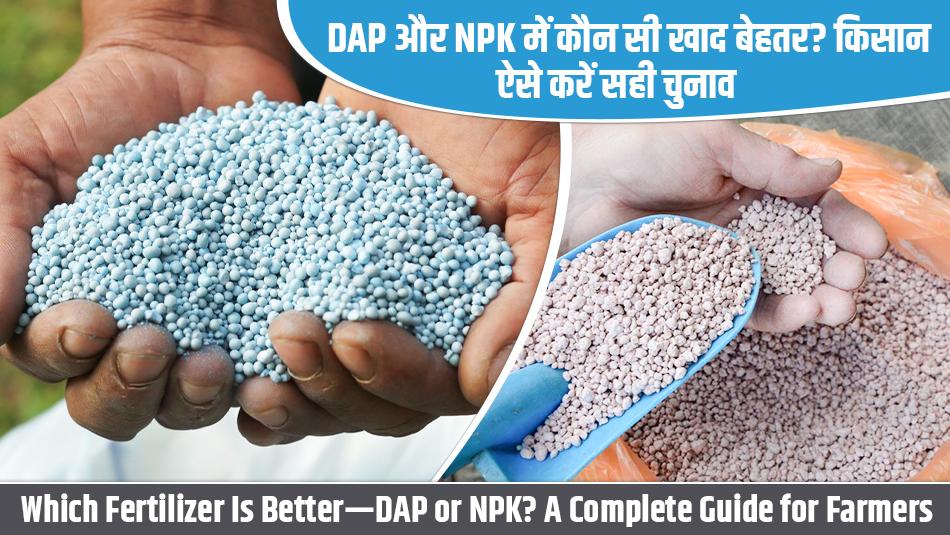

Choosing the right fertilizer has a direct impact on crop yield, plant growth, and overall quality. While many farmers still rely heavily on DAP (Di-Ammonium Phosphate), agricultural experts now recommend using NPK fertilizers based on the specific nutrient needs of each crop.
DAP provides two primary nutrients:
However, it does not contain important nutrients such as Potash and Sulphur. The absence of these elements limits the crop’s overall quality, strength, and disease resistance.
NPK fertilizers supply all three major nutrients—Nitrogen (N), Phosphorus (P), and Potassium (K)—in balanced proportions.
They are available in several combinations, including:
This balanced nutrient mix promotes:
Cereals and pulses – NPK 12:32:16
Root, tuber and oilseed crops – NPK 10:26:26
Vegetables, fruits and flowers – NPK 16:16:16 or 15:15:15
Sugarcane and banana – NPK 15:15:15
These nutrient ratios are specifically designed to match the needs of different crop groups.
DAP remains a widely used traditional fertilizer, but it provides only limited nutrition.
NPK, on the other hand, offers balanced and complete nutrition, resulting in:
When fertilizers are chosen according to the crop’s requirements, NPK is generally a more effective and beneficial option than DAP. Its balanced composition supports complete plant growth and enhances overall productivity.
Latest Update