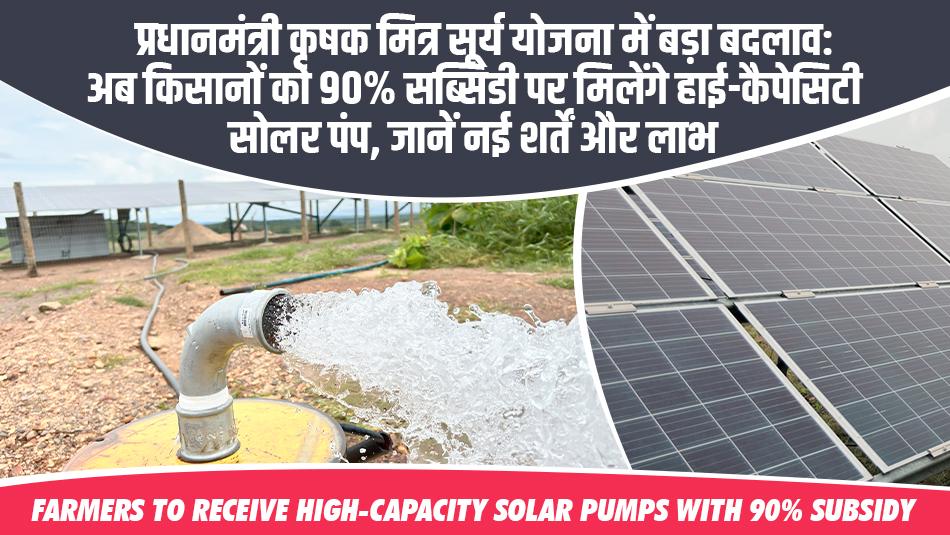

The Madhya Pradesh government has announced a significant revision to the Pradhan Mantri Krishak Mitra Surya Yojana, bringing major relief to farmers relying on irrigation. Under the new update, farmers will now be able to access higher-capacity solar pumps at 90% government subsidy. The decision was approved during the cabinet meeting held on 18 November, chaired by Chief Minister Dr. Mohan Yadav.
According to the revised guidelines approved by the cabinet, farmers will now be allowed to choose a solar pump with one level higher capacity than their existing electricity connection.
This upgrade is expected to improve water availability, enhance irrigation efficiency, and support cultivation on larger land areas.
In the first phase of the scheme, priority will be given to farmers with temporary electricity connections and those who are not yet electrified.
Under the new subsidy structure:
This move will significantly reduce irrigation expenses and lower dependence on grid electricity.
The Central Government’s KUSUM-B scheme was reintroduced in Madhya Pradesh as the Pradhan Mantri Krishak Mitra Surya Yojana on 24 January 2025.
The scheme is being implemented by the Madhya Pradesh Urja Vikas Nigam (MPUVN).
Latest Update