Wheat Farming Without Tilling Becomes Easier in UP — Government Offering Subsidy on Happy Seeder & Zero-Till Drill: Know How to Avail the Benefit
Wheat Farming Without Tilling Becomes Easier in UP — Government Offering Subsidy on Happy Seeder & Zero-Till Drill: Know How to Avail the Benefit
Wheat Farming Without Tilling Becomes Easier in UP
Krishi Dunia
18 Nov, 2025 10:25 AM IST ,
Updated Tue, 18 Nov 2025 06:44 PM
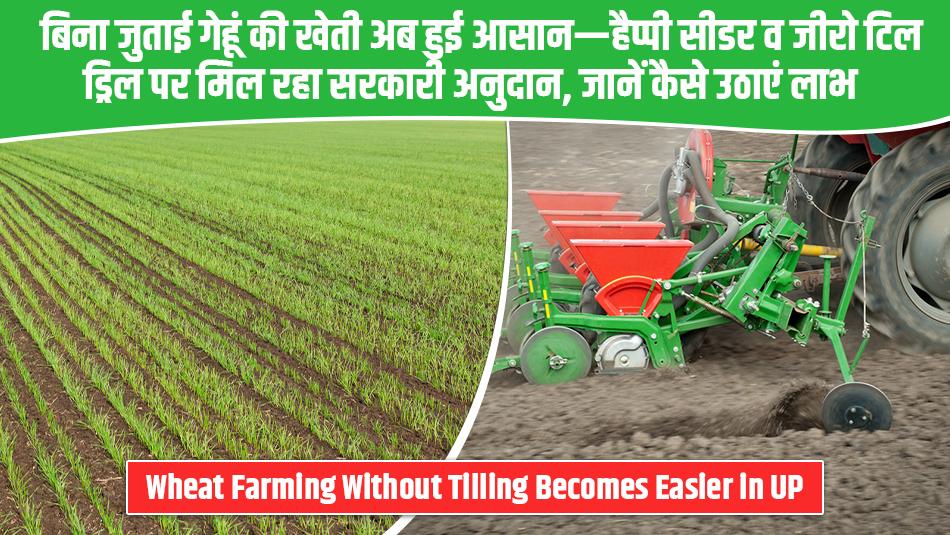
Uttar Pradesh News: This year, a major relief has arrived for farmers in Uttar Pradesh as wheat cultivation has now become easier and more economical. With modern machines supported by government subsidies, farmers can now sow wheat without tilling the field. This technique is gaining rapid popularity across the state. The government is also focusing on preventing stubble burning, which will reduce air pollution and improve soil fertility.
At present, paddy harvesting is almost complete in most districts of the state, and the recent rainfall has increased soil moisture — making it ideal for no-till wheat sowing. The administration has instructed all districts to strictly prevent stubble burning, and nodal officers have been deployed.
Sowing Wheat Without Tilling: Big Benefits for Farmers
Agricultural scientists say that leftover stubble naturally decomposes over time, turning into organic manure. This provides essential nutrients to the next crop. Along with this, farmers benefit from:
Diesel savings
Less irrigation requirement
Reduced labour cost
Better utilisation of expensive fertilizers
Better germination and easier pest/weed control
October to 15 December is considered the prime season for rabi sowing, and wheat is the major crop in Uttar Pradesh.
Machines That Enable No-Till Sowing — And Government Subsidy Available
The Yogi government is offering subsidies on several modern agricultural machines. These include:
Zero-Till Seed Drill
Zero Fertilizer Seeder
Happy Seeder
Straw Reaper
Baler
Forage Harvester
Stubble Decomposer
These machines allow wheat sowing directly into the field full of paddy stubble. The government is also using ‘Kisan Rath’ awareness vehicles to educate farmers in rural areas.
Why the No-Till Technique Is Special?
This technology is particularly useful in regions that follow the paddy–wheat crop cycle.
Saves nearly two weeks required for land preparation
Timely sowing leads to higher yields
Stubble decomposes into natural compost
Reduces carbon emissions and pollution
How the Zero-Till Machine Works
These machines use strong tines instead of traditional plough blades.
Tines open the soil to the required depth
Seeds and fertilizers are dropped directly into the soil
Some advanced models perform light tilling while moving
Important Precautions Before Sowing
Remove weeds and large stubble pieces from the field
Light leveling may be needed if soil moisture is low
Preferably irrigate lightly a few days before harvesting
Use only granular fertilizers during sowing
Reduces Air Pollution Too
According to CIMMYT scientist Ajay Kumar:
Burning 1 litre of diesel releases 2.6 kg of CO₂
A single hectare of tilling consumes around 150 litres diesel
This means 450 kg carbon emissions from land preparation alone
Zero-till machines significantly reduce fuel and water consumption — helping protect the environment.
Major Advantages of No-Till Wheat Sowing (Farmers Must Know)
Cost reduction of ₹2,000–₹2,500 per hectare
10–30% higher yield even with less seed
Up to 80% savings on labour, resources, and energy
15% less irrigation water requirement
Easy pest and disease management due to line sowing