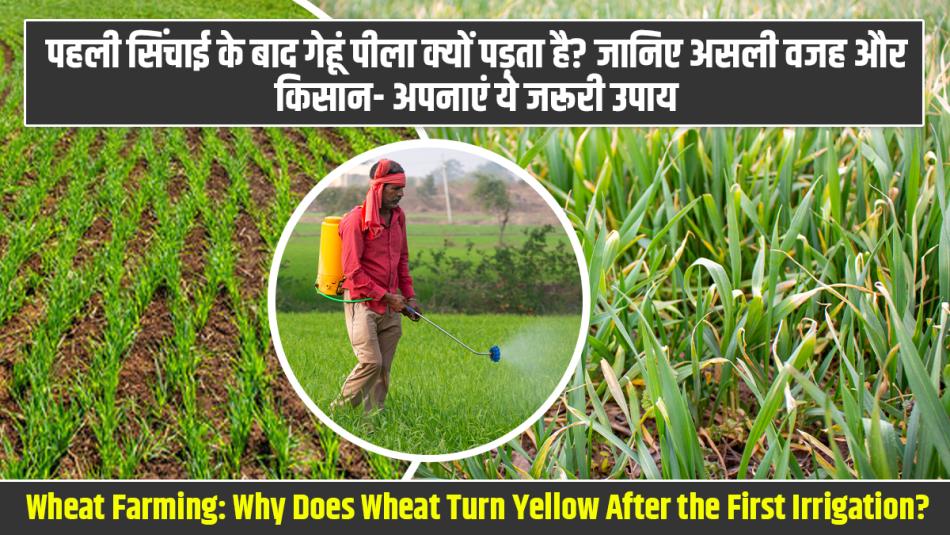

Farmer brothers, if your wheat crop starts turning yellow instead of lush green after the first irrigation, you are not alone. Due to cold weather, fog, and excess moisture, many farmers across the country are currently facing this issue. While standing crops should bring happiness, yellowing leaves often become a cause of concern.
The good news is that with timely irrigation management, balanced nutrition, and proper crop care, this problem can be easily controlled. Let us understand why wheat turns yellow after the first irrigation and what steps farmers should take to prevent it.
According to agricultural experts, cold temperatures, fog, and high moisture levels increase the risk of nutrient deficiency and diseases in wheat during this stage. Many farmers provide the first irrigation on time but fail to apply balanced fertilizers afterward. As a result, plants do not receive adequate nutrition, leading to yellowing of leaves.
During the early growth stage, wheat requires essential nutrients such as Nitrogen, Zinc, Sulphur, and Iron.
If these nutrients are not replenished after the first irrigation, the crop may become weak and unproductive.
Cold and foggy weather creates favorable conditions for various wheat diseases, such as:
These diseases restrict nutrient absorption and slow plant growth, causing leaves to turn yellow.
If water remains standing in the field for a long time after irrigation, wheat roots do not get enough oxygen. This weakens the root system and prevents proper nutrient uptake, resulting in yellow leaves. Therefore, proper drainage is extremely important.
Farmers should adopt the following measures:
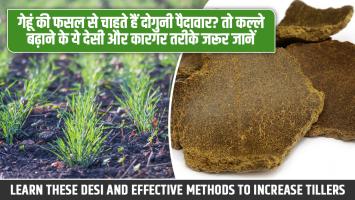
If farmers take proper care of wheat after the first irrigation, provide balanced nutrition, and control diseases in time, yellowing of leaves can be easily prevented. This will keep the crop healthy, increase the number of tillers, and ultimately lead to higher wheat yield and better quality produce.
Note: Always consult the nearest agriculture department or agricultural expert before using fertilizers, nutrients, or pesticides.
Latest Update